Stock
Batches, expiry dates, and movements: traceability at the core.
Traceability by batch, not by product
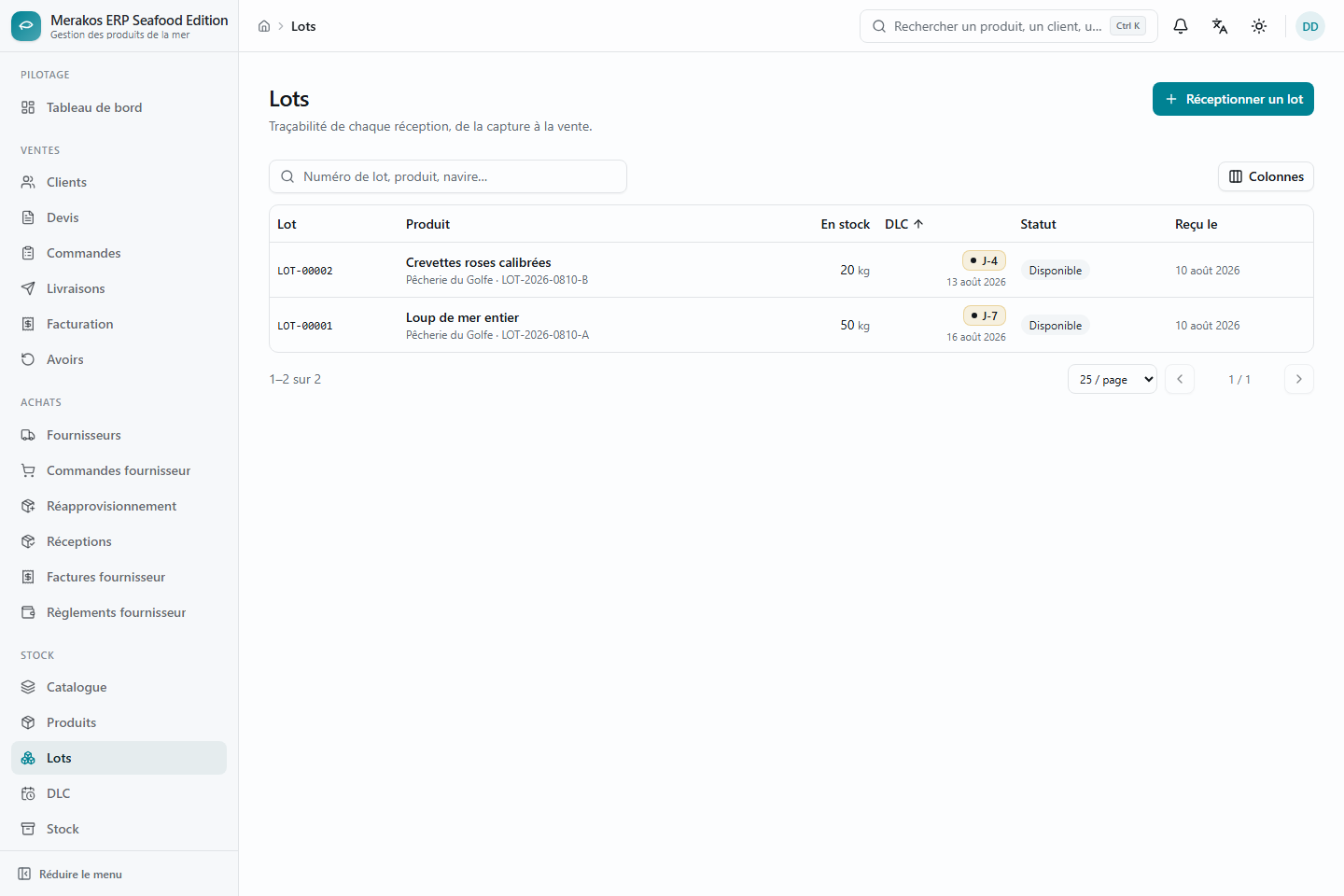
Every receipt creates one or more batches, each carrying its own origin (vessel, catch area, catch date), expiry date, and cost. A batch moves through five possible states: active, depleted, expired, quarantined, or recalled — the last three all block it from shipping.
Freshness at a glance
Every batch shows a freshness level computed automatically from how close it is to its expiry date: expired, critical (1 day or less), warning (3 days or less), watch (7 days or less), or OK. A batch expiring today stays sellable through the end of the day.
Quality checkpoints
Quality checks can be logged at every stage — reception, storage, transport, processing. A non-conforming check always requires a described corrective action.
Stock movements
Every stock in or out is logged: receipt, sale, customer return, supplier return, adjustment, inventory count, loss, or transformation. Any loss must specify a cause (expiry, damage, quality, theft, cold-chain break…), and any adjustment or loss requires an explanatory note — so a discrepancy found six months later still makes sense.
Automatic allocation (FEFO)
When a sale or delivery draws down stock, Merakos automatically picks which batches ship first using FEFO (first-expiry, first-out) — unless manually overridden for a specific batch.
Inventory counts
An inventory count compares, batch by batch, the counted quantity against the expected quantity and calculates the variance automatically.
Missing or inaccurate information? Write to us at sales@merakos.cloud